From a three-person office in Ottawa, Canada to a globally recognized coastal engineering firm with 14 offices in six countries, W.F. Baird & Associates Ltd. (www.baird.com) has grown steadily over the past 45 years, all while maintaining a constant mission — to deliver innovative, practical and effective science-based solutions to complex problems wherever water meets land with professionalism and dedication.
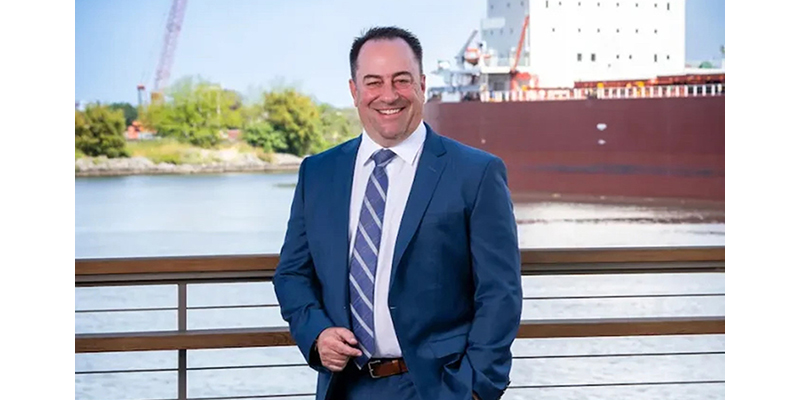
According to Dave Anglin, a Principal and Senior Coastal Engineer based in Ottawa and 44-year veteran with Baird, and relative newcomer Chris Thomas, Associate Principal and Senior Marine Engineer based in Tacoma, Washington, membership in the Association of Pacific Ports (APP) reinforces Baird’s technical commitment and long-term engagement with the Pacific maritime community. It also reflects a strategic commitment to the region’s maritime future. The Pacific basin faces aging infrastructure, climate resilience pressures and evolving trade and defense requirements. With offices surrounding the Pacific Ocean (Sydney, Australia; Anchorage, Alaska; Vancouver, Canada; Tacoma, Washington; and Santiago, Chile), Baird is well positioned to serve clients throughout the region.
Founded in 1981, Baird set out to do something distinct: concentrate exclusively on coastal and marine engineering. That focus has never wavered. The firm does not design buildings or broad civil works; instead, it concentrates on ports, harbors, marine terminals, breakwaters, flooding and erosion mitigation, coastal processes, and risk and resilience related to coastal hazards.
Now with roughly 135 staff, that clarity of purpose has helped establish an international reputation built on technical excellence and client service. Frequently acting as the prime consultant and engineer of record, Baird often partners with other firms and coordinates multidisciplinary teams as required to meet the unique challenges of specific projects. The company’s model is flexible: prime consultant, subconsultant, owner’s engineer, or part of a design-build or EPC (engineering, procurement and construction) team — whatever it takes to deliver a successful project!
Pacific momentum
Baird has been involved in a wide range of coastal and marine infrastructure projects over the past 45 years along the west coast of the Americas (Alaska, Canada, continental US, Mexico, Guatemala, El Salvador, Peru, and Chile), the east coast of Australia and in Hawaii, Papua New Guinea, and the Philippines.
Their most recent undertaking in the Pacific is the $563-million Apra Harbor Waterfront Repair (AHWR) project in Guam, with Baird being the designer of record for comprehensive repairs to the 85-year-old Admiral Glass Breakwater. The project came to Baird through long-standing industry relationships and collaboration with Black Construction (a Guam-based subsidiary of the Tutor Perini Corporation, in a joint venture with NAN) and reflects Baird’s strengths in coastal and marine infrastructure design and construction-phase support.
This multi-year project, expected to run into 2029, is a cornerstone project in the Pacific and a gateway to further regional opportunities. As engineer of record, Baird was responsible for field studies, numerical and physical modeling, final designs, plans and specifications. The design work was completed in 2025 and construction is now ramping up, with Baird engineers providing full-time on-site representation as the work advances.
The AHWR project aligns with a broader strategic focus on U.S. Navy and Pacific-region infrastructure. Guam serves as a critical hub for the U.S. Navy, but broader regional decentralization efforts — modernizing and rehabilitating legacy infrastructure across Pacific islands — present significant opportunities.
While Baird’s client on the breakwater is the U.S. Navy/NAVFAC, the project intersects with local stakeholders, including the Port Authority of Guam, underscoring the layered nature of marine infrastructure delivery in defense and commercial environments.
Pacific island nations and territories are also evaluating upgrades to aging port facilities, many dating back to World War II. As military and commercial demands evolve, the need for resilient, modernized marine terminals is growing. “The Pacific is very relevant for us right now,” said Anglin. “The Glass Breakwater project has been a tremendous stepping stone. It’s opened doors and relationships across the region.”
Another project that Baird recently supported was the $177-million reconstruction of the fuel pier and shoreline protection for the USACE/USAF at Eareckson Air Station on Shemya Island, near the western end of the Aleutian Island chain. In this case, Baird was part of the design-build team led by the Brice-Turnagain JV.
Moving across the Pacific to Australia, Baird has extensive experience with a wide range of projects “Down Under”, including numerous studies along Australia’s east coast. Baird has delivered statewide tropical cyclone risk assessments, including along the entire Queensland coast, using detailed storm surge and inundation modelling to clarify coastal exposure for the insurance sector. The study strengthens risk‑based insurance decisions while giving coastal communities and port operations clearer insight into their vulnerabilities and the adaptation measures needed to build long‑term resilience.
Baird is also advancing operational forecasting and structural resilience for key maritime assets along the east coast. For the Port Authority of New South Wales, Baird has developed an advanced wave‑forecasting system that combines numerical models, machine‑learning corrections and real‑time data to enhance short‑ and medium‑term forecast accuracy for all port operations along the NSW coastline. In Queensland, Baird has contributed to structural reliability assessments for major port infrastructure evaluating environmental loading conditions, age‑related deterioration, and future climate impacts to support long‑term asset management and upgrade planning.
Baird’s Pacific engagement also includes contributing work on Taiwan’s offshore wind development as that country emerges as a global leader in the renewable energy sector. Marine engineering plays a pivotal role in that transformation, from foundation design to port infrastructure upgrades required to support turbine assembly and installation. For Baird, offshore wind aligns naturally with its coastal and marine specialization. “Offshore wind requires a sophisticated understanding of wave climates, seabed conditions, marine construction logistics, and navigation — core strengths of our firm,” said Thomas. “As the world focuses more on climate change and resilience, we’re in a very unique and exciting space.”
Taking a pragmatic approach to projects where climate resilience is a key consideration, Anglin noted that rising sea levels, intensified storm events, and significant uncertainty in the impact of climate change as one looks further into the future, require new approaches to design. “It’s a balancing act,” he said. “You must account for climate change, but you can’t design for the absolute worst case in every scenario — it’s just not practical. So, we look at adaptation. How do you design something that can be modified if conditions turn out worse than assumed?”
This approach resonates strongly in the Pacific, where coastal communities and ports are closely connected and resources must be carefully allocated.
Beyond the Pacific, the Arctic is another region of significant interest to Baird; this region is undergoing rapid environmental transformation in response to global warming, with these changes creating new challenges and opportunities.
In Tuktoyaktuk, Canada, Baird recently completed a US$40-million coastal erosion protection project. Thawing permafrost has destabilized shorelines as frozen soils become liquefied, with wave attack resulting in severe erosion. “Permafrost degradation creates very serious erosion problems,” Anglin says. “In sparsely populated areas it may not be critical, but in a community like Tuktoyaktuk, it absolutely is.”
And facilities such as the Port of Churchill on Hudson Bay (at 58.78oN!) and Baffinland’s proposed iron ore export terminal at Steensby Inlet on Baffin Island (at 70.25oN!) are part of a broader conversation about northern shipping, exploration, development, and sovereignty.
Experience gained in Arctic adaptation feeds directly into Pacific resilience projects, strengthening the firm’s global perspective.
Purpose-driven growth
Despite its global footprint, Baird maintains a humble, focused corporate culture. The organic growth of the employee-owned company has been deliberate, shaped by opportunity, expertise, and relationships rather than scale for its own sake. Central to Baird’s identity is its “One Team Worldwide” philosophy. With expertise distributed across offices in North, Central and South America, Australia and Europe, the firm builds project teams based on technical fit rather than geography.
“Any project of significance brings people together from across multiple offices,” said Anglin. “We’ve got different talents spread around the world, and we bring together the people best suited to meet each project’s requirements.”
“We work with our clients to build qualified, project-specific teams comprised of local, national and international resources to best achieve the client’s goals and objectives”, with Thomas emphasizing the importance of early engagement. “The earlier we get onto a job, the better it typically ends up,” he said. “If we can help during funding or concept stages, we can help drive the right technical solution from the beginning.”
Through APP, Baird aims to deepen those early-stage conversations, sharing technical insights with Pacific port authorities who are planning rehabilitation and modernization projects — many involving infrastructure originally built decades ago.
The future for Baird
At the end of 2025, long-serving CEO Kevin MacIntosh stepped down from this role; however, he will extend his 45-year career at Baird by returning his focus to the challenging projects he loves to work on and will also serve as Chair on Baird’s Board of Directors. His successor as CEO, Ed Liegel, who is transitioning into this role from COO, has been with Baird for 20 years.
“Kevin felt it was time to slow down a little,” said Anglin. “Ed was the obvious candidate to take Kevin’s place. Kevin has infinite energy and a very strategic mindset, and Ed brings those same qualities to the role.” He described both leaders as visionaries who understand the long-term trajectory of coastal infrastructure and the importance of relationships. For clients and partners, the message is clear: the firm’s direction remains steady, grounded in expertise and collaboration.
Indeed, the corporate culture at Baird has always been “very friendly, very easy going but stacked full of technical expertise,” said Thomas who has been with the company’s Washington office for just under two years.
Anglin agreed: “Participating here requires passion, focus and creativity. We’ve set very high standards for everyone because that’s what’s necessary to sustain our international reputation for excellence and our unwavering commitment to our clients.” He added that the company encourages professionals to shape their careers through challenging projects, research and development initiatives, and mentoring. “Baird is about colleagues, clients, family and friends,” he said. “The more those relationships overlap in a positive way, the more rewarding your career becomes.”
Despite its expanding footprint, Baird does not chase growth for growth’s sake. “We don’t have a specific target to be 500 people in 10 years,” said Anglin. “Growth for us is about providing fulfilling careers and interesting projects. The size increase is a by-product.”
Ultimately, Anglin summarizes, “Baird is about developing relationships and demonstrating leadership. We focus on project development and delivery as One Team Worldwide – and our clients are an integral part of our project teams.”
For Pacific ports facing complex coastal challenges, and for professionals drawn to the dynamic interface between land and water, Baird’s next chapter – anchored by APP membership and renewed leadership – signals both continuity and opportunity.
For more information, visit:
www.baird.com
Or contact:
Dave Anglin (danglin@baird.com)
Chris Thomas
(cthomas@baird.com)