April 29, 2026 — Nature is thriving above and below the ocean surface at the Port of Long Beach, with improved water clarity and habitat supporting diverse and productive communities of organisms, according to the latest biological survey of the San Pedro Bay.
Released in connection with Earth Month, the survey can be viewed at www.polb.com/wildlife. The fifth port complex-wide study since 2000, it was conducted across three seasons in 2023, measuring water quality and marine habitat at the neighboring ports of Long Beach and Los Angeles. Survey data are used by the ports and partner agencies that monitor the harbor’s flora and fauna to evaluate progress toward improving the health of the natural resources under their stewardship.
“Building the Port of the Future means moving cargo faster and safer, but also more sustainably,” said Port of Long Beach CEO Dr. Noel Hacegaba. “Life in the harbor continues to flourish due to our ongoing environmental initiatives to improve water quality and the continuing support of our supply chain partners to help us achieve our goals to be a responsible environmental steward.”
“When we adopted the Green Port Policy more than 20 years ago, we truly believed that we could be both sustainable and an economic engine,” said Long Beach Harbor Commission President Frank Colonna. “Today, the results are in: we have a thriving ecosystem and we are busier than ever. Congratulations to everyone who has played a role in showing the community that we are serious about being a good neighbor.”
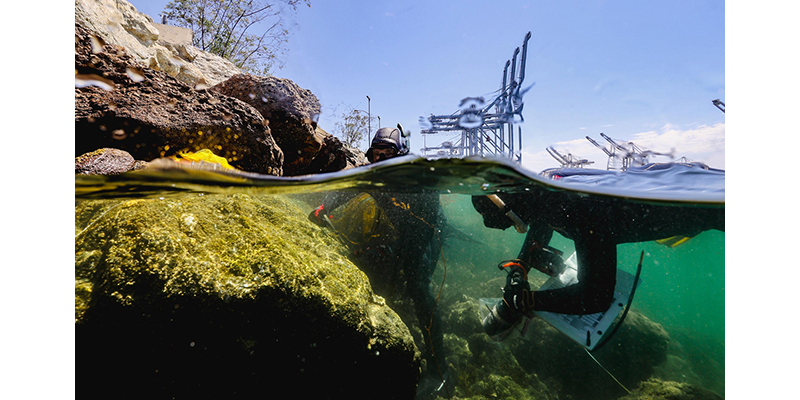
During the survey, a team of biologists and divers observed more than 1,000 species, including 97 species of fish, 842 species of invertebrates, 110 species of birds and four species of marine mammals: sea lions, harbor seals, dolphins and seasonally visiting gray whales in the Outer Harbor. Non-native species remain at only 5% of all species detected, consistent with prior biological surveys, which is a testament to the success of port environmental initiatives as well as state and federal regulatory programs.
The 2023 biological survey is the first to implement high resolution imagery from commercial satellites to map critical habitat, gauge sea surface temperature and water clarity, and track the distribution of “chlorophyll a,” the primary pigment in plants that converts light energy into chemical energy for photosynthesis. In summer 2023, this imagery measured approximately 43 acres of submerged and canopy kelp canopy within the harbor, providing abundant habitat for various species.
New survey methods similar to those used by divers to monitor the health of reef habitats were also utilized to catalog fish, invertebrates and algae communities on the port complex’s humanmade “riprap” or rocky embankments, the federal breakwater and concrete pilings. In 2023, three of the 16 fish species monitored across all surveys were only found during riprap and piling dive surveys, including cabezon, black-and-yellow rockfish, and olive/yellowtail rockfish.
In addition to the full biological survey report, a colorful, illustrative online brochure is available to learn about two decades of efforts to reduce the environmental impacts to San Pedro Bay. The “Look Beneath the Surface” pamphlet is available here.
Learn more about the Port of Long Beach’s initiatives to improve the harbor’s habitat at www.polb.com/wildlife.