
 November 24, 2026 — For FRAME Strategies LLC (FRAMETM), helping ports prepare for the future starts with understanding where they stand today. Founded in 2026, the small business enterprise (SBE) brings together first-hand port management experience, strategic planning expertise and a practical understanding of the challenges facing public port authorities and marine terminal operators.
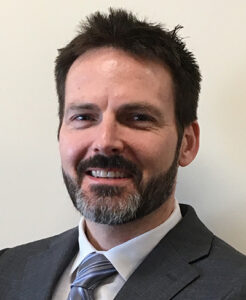
Led by founder Michael Vanderbeek, FRAMETM works with port authorities, terminal operators, municipalities and other organizations to navigate complex strategic decisions. Their approach is grounded in a straightforward philosophy: Perspective is paramount.
The company’s name reflects the five areas that form the foundation of its work: Facilities, Resources, Access, Markets and Engagement. Together, these considerations provide a framework for assessing an organization’s competitive position, identifying opportunities and weaknesses, and developing achievable pathways for improvement.
For Michael, establishing FRAMETM represents an opportunity to bring more than 21 years of experience in the port and maritime industry to clients in a more focused and collaborative way. Based in Massachusetts, Michael has worked on port planning and development initiatives throughout North America and internationally. His experience spans public port authorities, private terminal operators, cruise lines, municipalities and institutional investors.
His professional background includes seven years at the Port of Long Beach, where he held leadership positions in strategic planning, tenant services and operations, and business development. He subsequently served as Director of Business Development at Port Everglades, Deputy Port Director at the Massachusetts Port Authority and Director of Ports and Maritime at Bermello Ajamil & Partners. Most recently, he was Port Planning Practice Leader at GHD and he currently serves as Vice Chair of the Professional Development Board of the American Association of Port Authorities (AAPA), helping identify and mentor the next generation of port and maritime leaders.
A different kind of consultancy
The decision to establish FRAMETM was driven in part by a desire to concentrate on the work itself rather than internal administration. While not ruling out a return to a traditional large-firm structure in the future, Michael has found a service delivery model in FRAMETM that allows for direct engagement with clients to develop solutions and contribute to projects where his experience make a direct and tangible difference. “There are only so many hours in the day, and I would rather spend as many of those as possible working with clients or working on projects,” he said, adding that FRAMETM frequently collaborates with other consultants, bringing together the expertise required for individual assignments without the overhead of maintaining a large organization.
The model also reflects the company’s family-first philosophy. Rather than pursuing growth for its own sake, FRAMETM is focused on providing meaningful value to clients while maintaining the flexibility to balance professional commitments with family life. “We don’t exist to generate wealth for shareholders or to grow for the sake of growing,” Michael said. “We exist to provide our clients value for money and to promote and sustain happy, healthy and harmonious human lives.”
That philosophy extends to the company’s approach to client relationships. FRAMETM emphasizes honest assessments, transparent communication and practical recommendations that recognize the financial, political, environmental and community considerations surrounding port development.
Three areas of expertise
FRAME’s services are organized around three principal areas: strategic master planning, facilities and capital planning, and energy transition planning.
Strategic master planning helps port authorities and terminal operators align organizational objectives with market realities, stakeholder priorities and available financial resources. The work ranges from market forecasting and feasibility assessments to infrastructure concepts and implementation roadmaps.
Michael believes effective planning must recognize that ports serve several interconnected purposes. Every port, regardless of its size or location, functions simultaneously as a multimodal transportation hub, an economic engine and a demand aggregator. Understanding how these roles intersect is essential to identifying a port’s unique value proposition and determining how it can best serve its regional economy.
This is particularly important as ports face increasing pressure to differentiate themselves in competitive markets. Rather than attempting to serve every cargo type or pursue every development opportunity, ports need to identify the supply chains and market segments where they can offer the greatest competitive advantage.
Facilities and capital planning focuses on maximizing infrastructure flexibility, improving operational efficiency and ensuring investment decisions support long-term organizational goals. For many ports, particularly smaller authorities with limited revenue-generating capacity, financing infrastructure improvements has become increasingly challenging. Traditional borrowing models are now supplemented by a complicated mix of public-private partnerships, federal grants and state assistance programs.
While discretionary government funding has provided important opportunities, Michael believes ports should be cautious about becoming overly dependent on grants that can change with political and administrative priorities. He sees a growing need for ports to evaluate their investment strategies more holistically, considering alternative funding models and ways to strengthen their long-term financial resilience.
“While large, well-capitalized ports may be able to support major projects through their own revenues and borrowing capacity, smaller ports often have far fewer options,” he said, noting that FRAMETM helps clients assess these differences, prioritize capital requirements and identify investment approaches that are realistic for their individual circumstances.
Energy transition planning addresses the rapidly changing energy requirements of ports and the broader maritime supply chain.
Much of the industry’s decarbonization focus to date has involved zero-emission cargo-handling equipment, battery energy storage systems and alternative fuels for trucks, locomotives, harbor craft and vessels. FRAMETM believes ports have an opportunity to play a much larger role in the clean energy transition.
As electricity demand increases across transportation, industry and communities, the availability of reliable, affordable energy is becoming a significant consideration for port development. Michael sees opportunities for ports to support distributed and decentralized electricity generation, including behind-the-meter power production, that can directly support terminal operations while contributing to broader regional energy needs.
In this context, energy transition planning is not simply about replacing existing equipment. It involves understanding how infrastructure, energy production, workforce requirements and regional economic development can be brought together.
Positioning ports for the future
Across all three service areas, FRAME’s work is shaped by a recognition that the maritime industry is entering a period of significant change. Ports are being asked to modernize aging infrastructure, strengthen supply chain resilience, accommodate changing trade patterns, address environmental requirements and remain economically competitive, often with limited financial and organizational resources.
Michael believes one of the most important considerations is recognizing that no two ports have exactly the same strengths, challenges or opportunities. A port’s location, available land, transportation connections, existing infrastructure, energy resources and relationships with surrounding communities all contribute to its competitive position. He also sees opportunities for ports to think beyond their traditional role as cargo gateways. In FRAME’s vision, tomorrow’s ports can become important energy producers and incubators of new industries, creating economic opportunities that extend well beyond their waterfront boundaries.
The ultimate goal is to help ports become more resilient, adaptable and valuable to the communities and economies they serve.
Looking ahead
As a newly established business, FRAMETM is focused on building collaborative relationships and contributing to projects where its experience and approach can make a meaningful difference.
For Michael, success is not measured by the size of the organization or the number of employees. It is measured by the quality of the work, the value delivered to clients and the opportunity to help move the industry forward. “Change the world, one project at a time” is how he describes FRAME’s longer-term ambition.
For ports navigating an increasingly complex operating environment, FRAME’s message is that sound decisions begin with sound perspective. By combining practical experience with strategic thinking, the company aims to help port organizations recognize their strengths, address their challenges and build a stronger foundation for the future.
The company’s values provide a straightforward guide to how it intends to operate: love what you do, work to live, earn your privileges, own your mistakes, embrace challenges and deliver what you promise.